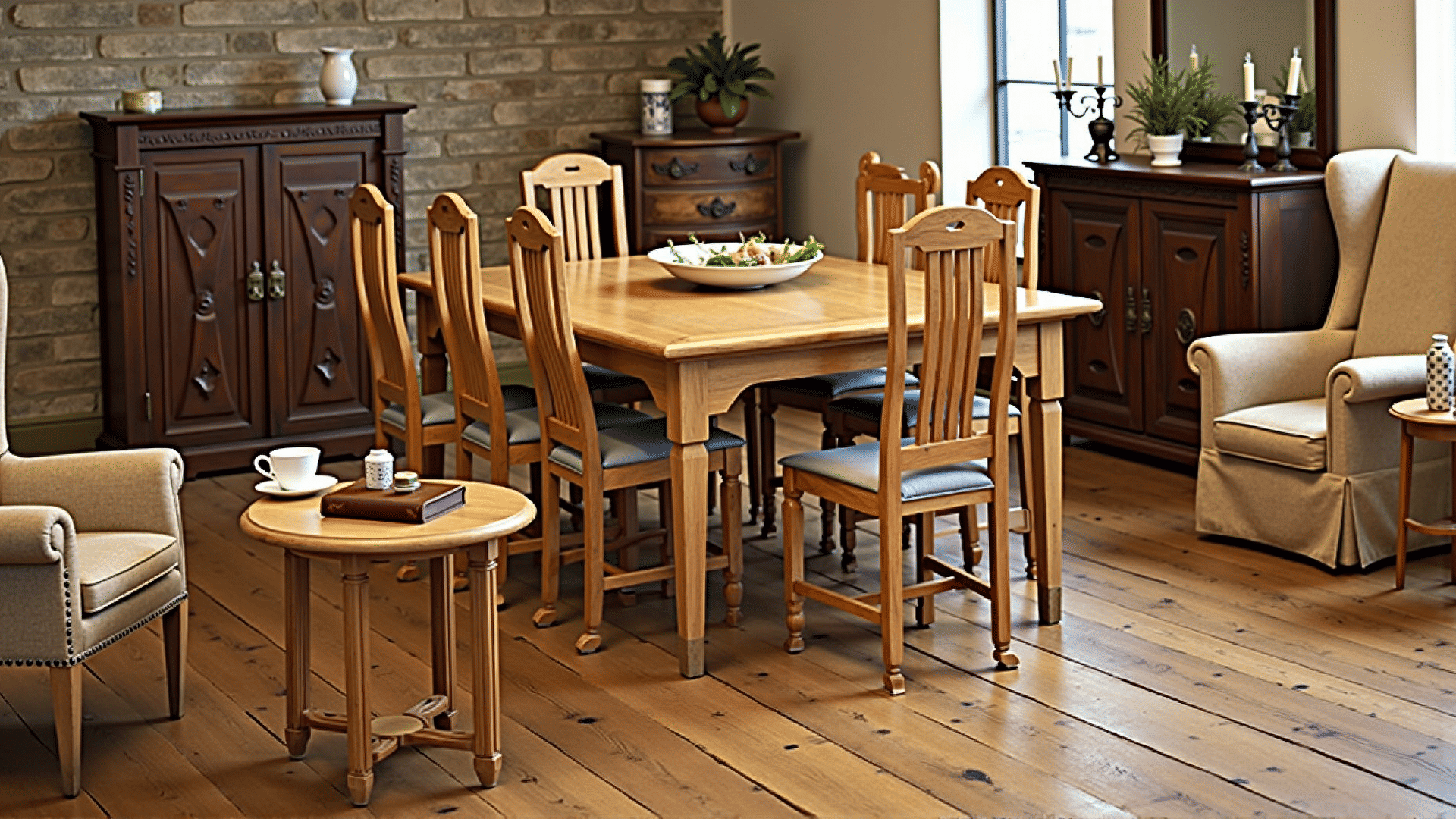
English furniture making has a rich history that highlights the evolution and adaptation of materials used to craft pieces that last generations. The focus on sustainability, intertwined with both tradition and modern innovation, has become central to this craft, reflecting a deep respect for the natural world and the resources it provides.
Traditional Materials
-
Oak: For centuries, oak has been a cornerstone in English furniture making. Known for its durability and intricate grain patterns, it has been favored for its strength and the beauty it adds to pieces such as tables and chairs. Historically, oak was readily available in the British Isles, making it an accessible and sustainable choice for artisans.
-
Walnut: In the 17th and 18th centuries, walnut became a popular choice due to its rich color and fine texture. Although not native to England, it was sustainably imported from Europe and the Americas, often reclaimed from older pieces to create new, sophisticated designs.
-
Beech: Used widely in bentwood furniture, beech has been prized for its light color and capacity to be shaped without breaking. Its abundance in English forests made it a sustainable choice for many artisans.
Modern Sustainable Materials
-
Bamboo: While not traditional to England, bamboo has gained popularity due to its rapid growth rate and renewability. It is both strong and flexible, suitable for crafting elegant and lightweight designs. Bamboo's versatility makes it ideal for structures and details that require both resilience and a contemporary aesthetic.
-
Reclaimed Wood: As sustainability takes center stage, reclaimed wood is extensively used to give life to new furniture pieces. Sourced from old buildings and past constructions, it provides a historic character and reduces the demand for newly harvested materials.
-
Cork: Known for its distinctive texture and buoyancy, cork is increasingly being used in modern designs. Sourced sustainably from cork oak trees, it serves as an eco-friendly material that adds a unique element to contemporary pieces.
Innovations in Sustainable Practices
The pursuit of sustainability has led to innovations that blend traditional techniques with modern sensibilities. Many English artisans now incorporate woodworking methods that minimize waste, and some employ local materials that reduce transportation emissions. In addition, collaborations with environmental organizations help ensure that the wood used is harvested ethically, fostering biodiversity and forest renewal.
Furthermore, advances in technology have enabled the development of bio-based materials, such as furniture-grade bioplastics and composites, which are designed to integrate seamlessly with natural fibers. These innovations allow craftsmen to explore new possibilities while maintaining a commitment to environmental responsibility.
Conclusion
The journey through the materials of English furniture making reveals a narrative of adaptation and respect for natural resources. By embracing both traditional woods and innovative, sustainable alternatives, today's artisans pay homage to their heritage while ensuring their craft remains relevant and responsible in the contemporary world. As this practice continues, it underscores the importance of sustainability in preserving the rich legacy of English furniture making for future generations.